
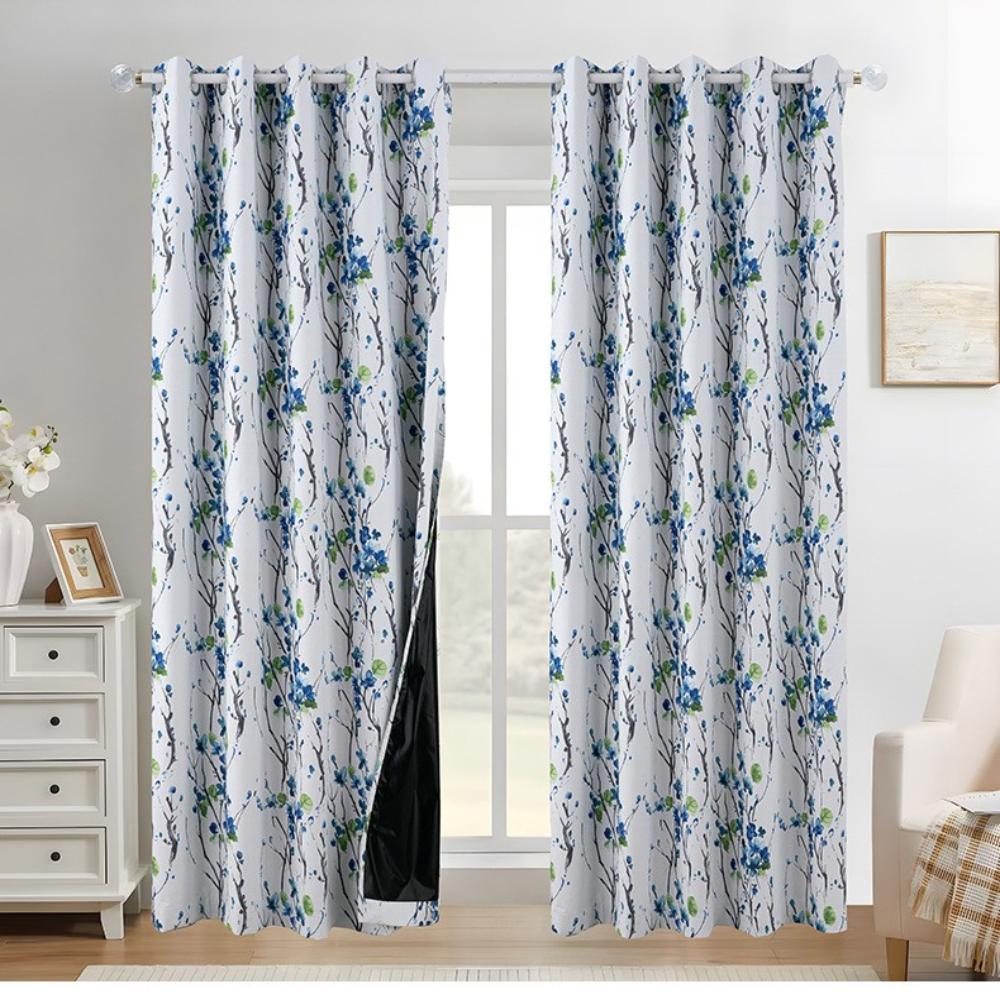
Before comparing curtain offers, ask what one quoted unit contains and how many individual panels it supplies. Keep a single panel, a proposed pair, a complete set and an outer pack as separate counting levels. Meimi Hometex’s Chunyafang Printed Blackout Curtain listing presents size and weight information on a single-panel basis, while its catalogue image shows a window arrangement. Use the product link to identify the enquiry, then obtain the supplier’s explicit panel count and quotation unit before comparing offers.
Use the product reference without counting the photograph
A buyer may describe its need as curtains for a room, a pair for a window or a quantity of individual panels. Those descriptions do not automatically mean the same supplied combination. Start the enquiry with the exact Meimi product link and the pattern or catalogue reference the buyer wants to discuss. Ask the supplier to identify the offered item before converting the request into an order quantity.
The official gallery shows panels in a furnished window setting. That view is useful for recognising a reference. It does not establish that the displayed arrangement, rod, tiebacks or surrounding furnishings are supplied together. The product title also does not define a commercial set. Request the supplied combination in writing instead of treating every object in the scene as part of the offer.
Define the panel as the basic counted object
For this enquiry, give an individual curtain panel its own row. Ask the supplier to state the offered panel identifier, the applicable pattern and the size reference attached to that panel. Where the buyer requests different sizes or patterns, keep each combination separate. A general total can hide an unwanted mixture of versions even when the overall number of panels appears correct.
Meimi’s listing explicitly places its size and weight information under a single-panel heading. This helps frame the question; it does not independently verify the listed measurements or the actual commercial contents of a new quotation. Ask the supplier to confirm the offered panel specification and state whether its quoted unit is one panel or another defined grouping.
Counting level | Buyer identifies | Supplier confirms
Single panel | Pattern and size reference requested | Offered panel identifier and specification
Pair proposal | Requested grouping of panels | Number and identity of panels in that grouping
Set | What the buyer means by a set | Included panels and separately listed extras
Quotation unit | Panel, pair, set or defined pack | The object being priced and counted
Outer pack | Required packing level if relevant | Confirmed contained units and panel total
Alternative | Supplier-proposed different grouping | Separate composition and revised quotation
Make a pair or set explicit
If the buyer wants panels supplied as a pair, state which panels should form that pair. Ask whether they use the same pattern and size reference or whether any distinction applies. Do not assume a supplier uses the word pair in the same way as the buyer. A written reply should identify the actual members, not merely repeat the buyer’s label.
If the supplier offers a set, request its included contents separately. A set might be the supplier’s commercial grouping rather than the buyer’s description of a complete window arrangement. Keep any proposed accessory on its own line and ask whether it is included, optional or unavailable. The enquiry should leave no unnamed extra inside a broad set description.
Compare quantities only after the units agree
Preserve the supplier’s original quotation unit beside any buyer calculation. A panel quotation and a set quotation cannot be compared meaningfully until the set composition is confirmed. Once the supplier has returned the number of panels in the offered grouping, calculate the corresponding panel total from those confirmed factors. Do not use an assumed gallery count as the conversion factor.
Keep the buyer’s demand basis visible as well. A requirement expressed by window or location still needs a separate decision about the panels wanted at each location. Provide that allocation or request clarification before converting it into supplier order units. This counting exercise does not determine fullness, installed coverage or suitability for a particular opening; those requirements need their own dimensions and agreement.
Check packing without changing the product count
Ask how the offered units are grouped for packing when the answer affects receiving or distribution. Keep the product quantity separate from the packing quantity. An outer pack count should not replace the number of panels ordered, and a retail grouping should not silently become the supplier’s quotation unit. Request the relevant packing relationship rather than inventing a standard ratio.
Before accepting the final response, reconcile the panel schedule, quoted grouping and total quantity. If the supplier changes the grouping or offers an alternative pattern, return to the affected row. Preserve the original request and proposed alternative distinctly so the buyer can see which combination it is actually accepting.
• Identify each requested panel version before combining quantities.
• Ask what every pair or set actually contains.
• Keep the priced unit beside the supplier’s confirmed panel factor.
• Reconcile packing levels separately from the ordered panel total.
Send a panel-basis quotation request
A practical RFQ can read: For the linked printed-curtain reference, please identify the offered panel version and state what one quotation unit contains. Confirm the number of panels per proposed pair, set or pack, and list accessories separately. Please keep different pattern or size combinations on separate lines and identify any alternative to our requested grouping.
Ask the supplier to keep the same identifiers in its final quotation. The useful result is a clearly counted offer that the buyer can compare and receive. It does not require an assumed price, minimum order quantity, delivery promise or performance claim to make the enquiry specific.
Frequently asked questions
Does a window photograph confirm that two panels are supplied?
It shows a catalogue arrangement. Ask the supplier to confirm the actual number of panels included in the quoted unit.
Can a panel price be compared directly with a set price?
First confirm the set composition and priced unit. Then calculate any comparison using the supplier-confirmed panel factor.
Are rods and tiebacks included when they appear in a picture?
Do not infer inclusion from the scene. Ask for a separate inclusion statement for each requested accessory.
Does a correct panel count establish installed coverage?
No. Coverage and the intended arrangement need their own confirmed dimensions and buyer requirements.
Product and contact references
Product reference: https://meimihometex.com/product/chunyafang-printed-blackout-curtain/
Related kitchenware: https://meimihometex.com/products/
Contact Meimi Hometex: https://meimihometex.com/contact/
Meimi Hometex blog: https://meimihometex.com/blog/