
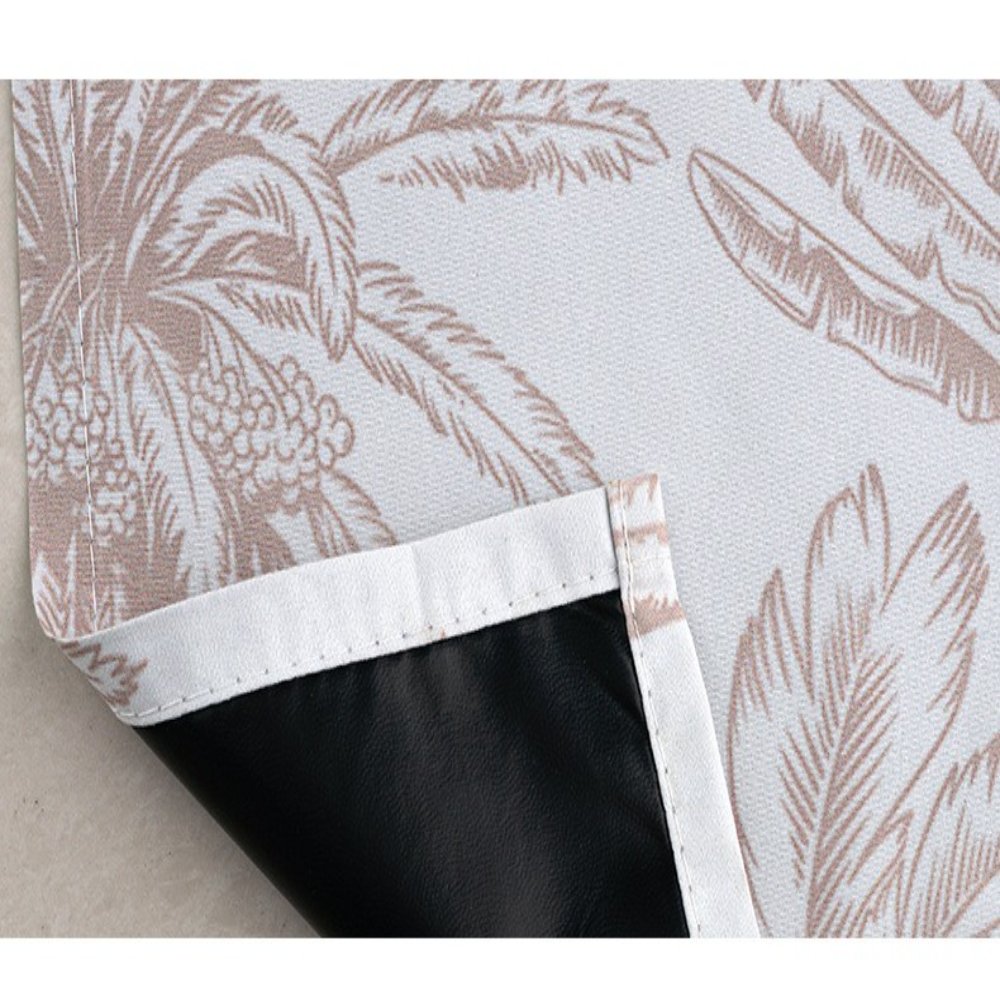
For a printed-curtain sample enquiry, request front, reverse and hem views of the same identified panel. Mark which side the buyer intends to face the room and connect every close-up to that sample. Meimi Hometex’s printed-curtain gallery includes a face-and-reverse detail that can help identify the enquiry. It does not independently establish the reverse material or construction method. Record the appearance decision separately from any material statement, care requirement or performance evidence needed for the purchase.
Identify the sample before discussing its sides
Start with the actual product link and the particular pattern reference requested. Meimi’s listing names different pattern references, so a general request for the curtain sample may leave the supplier uncertain about the intended version. Ask for the offered item identifier and a sample identifier that can appear beside each returned photograph.
Keep the whole-panel view with the close-ups. A detailed picture of a dark reverse is useful only when the buyer can connect it to the panel being considered. The sample identifier should distinguish that panel from another pattern, size or supplier-proposed alternative. Do not approve a collection of unrelated catalogue close-ups as though they describe one confirmed supplied version.
Name the intended room-facing side
Ask the supplier to identify the front and reverse using its own product description. Then state which side the buyer expects to face the room in the proposed arrangement. A product photograph may suggest an orientation, but the supplier’s response should make the intended sides explicit. Keep that answer attached to the identified sample rather than relying on an unlabeled image.
If the buyer wants a different visible-side arrangement, describe it as a requirement or question. Do not assume both sides are intended as decorative faces or that the product can be reversed in use. Ask the supplier to explain the offered arrangement and any limitation relevant to that request before the buyer accepts the sample.
Requested view | What it identifies | What still needs a separate answer
Whole front | Offered pattern and intended visible face | Exact item and sample identifier
Whole reverse | Reverse appearance of that same panel | Confirmed reverse description
Turned corner | Connection between front and reverse | Any claimed material or construction
Hem close-up | Visible edge and stitching appearance | Agreed acceptance details if required
Alternative version | A separately proposed panel | Which version the buyer is accepting
Use a turned corner to connect the views
A photograph with a corner turned back can help the buyer connect the printed face to the reverse on the same object. Ask the supplier to keep the sample identifier visible and show enough surrounding fabric to locate the close-up. Where a hem or edge is under discussion, indicate the area the buyer wants shown rather than requesting only a more detailed picture.
The official Meimi close-up provides a product reference with a printed face and a dark reverse visible near an edge. It is a catalogue reference, not a technical cross-section. Do not infer a particular coating chemistry, lamination process, number of layers or verified composition from the visual transition. Request a separate statement tied to the offered version when those points matter.
Describe appearance comments precisely
Return comments against the identified view and location. The buyer might ask the supplier to clarify the visible reverse colour, show an edge more clearly or identify which detail belongs to an alternative pattern. Such comments are easier to resolve than a general statement that the back looks different, especially if several pictures were taken under different lighting.
Keep a screen-image decision within its practical limits. A photograph can help communicate visible arrangement and identify the sample. It does not establish an exact colour match, surface feel or another property that requires a physical reference. If the buyer needs a retained sample or an agreed colour reference, request it separately and connect it to the same offered panel identifier.
Separate appearance from performance claims
A dark reverse in a picture is not a measured light-blocking result. Likewise, a catalogue title containing blackout does not establish the performance of the sample under the buyer’s intended conditions. Ask for relevant product-specific information if that is a purchase requirement. Keep the source title as an identification aid without turning it into an unsupported guarantee.
The same separation applies to material and care statements. Ask the supplier what statement applies to the identified offered panel and whether it describes the whole product or a particular part. An appearance approval should not silently accept every marketing phrase on a related page. Record the question that was answered and leave unresolved requirements open.
• Connect all front, reverse and detail views to one sample.
• Identify the intended room-facing side explicitly.
• Return comments against a marked location or named view.
• Keep material, physical colour, care and performance requirements separate.
Send a front-and-reverse sample request
An enquiry can read: For the linked printed-curtain reference and requested pattern, please identify the offered panel and sample. Provide front, reverse and turned-hem views of that same sample, marking the intended room-facing side. Please state what the reverse description applies to and keep any different version or construction proposal separate.
Once the buyer has returned its appearance decision, ask the supplier to reference the accepted sample or views in its final reply. If another sample is substituted, request an explanation of what changed. This creates a retrievable appearance reference without claiming that photographs alone verify the product’s material or performance.
Frequently asked questions
Does a dark reverse prove a blackout percentage?
No. It is an appearance reference. Any light-blocking requirement needs separate information tied to the offered product and the required assessment.
Should front and reverse photographs share a sample identifier?
Yes. That connects the views to the same offered panel and helps avoid approving details from different versions.
Can a close-up identify the reverse material?
It can show visible appearance. Ask for a separate supplier description rather than inferring chemistry or construction from the photograph.
What if a replacement sample looks different?
Ask the supplier to identify the new sample and explain the difference before carrying the earlier appearance approval into the new offer.
Product and contact references
Product reference: https://meimihometex.com/product/chunyafang-printed-blackout-curtain/
Related kitchenware: https://meimihometex.com/products/
Contact Meimi Hometex: https://meimihometex.com/contact/
Meimi Hometex blog: https://meimihometex.com/blog/